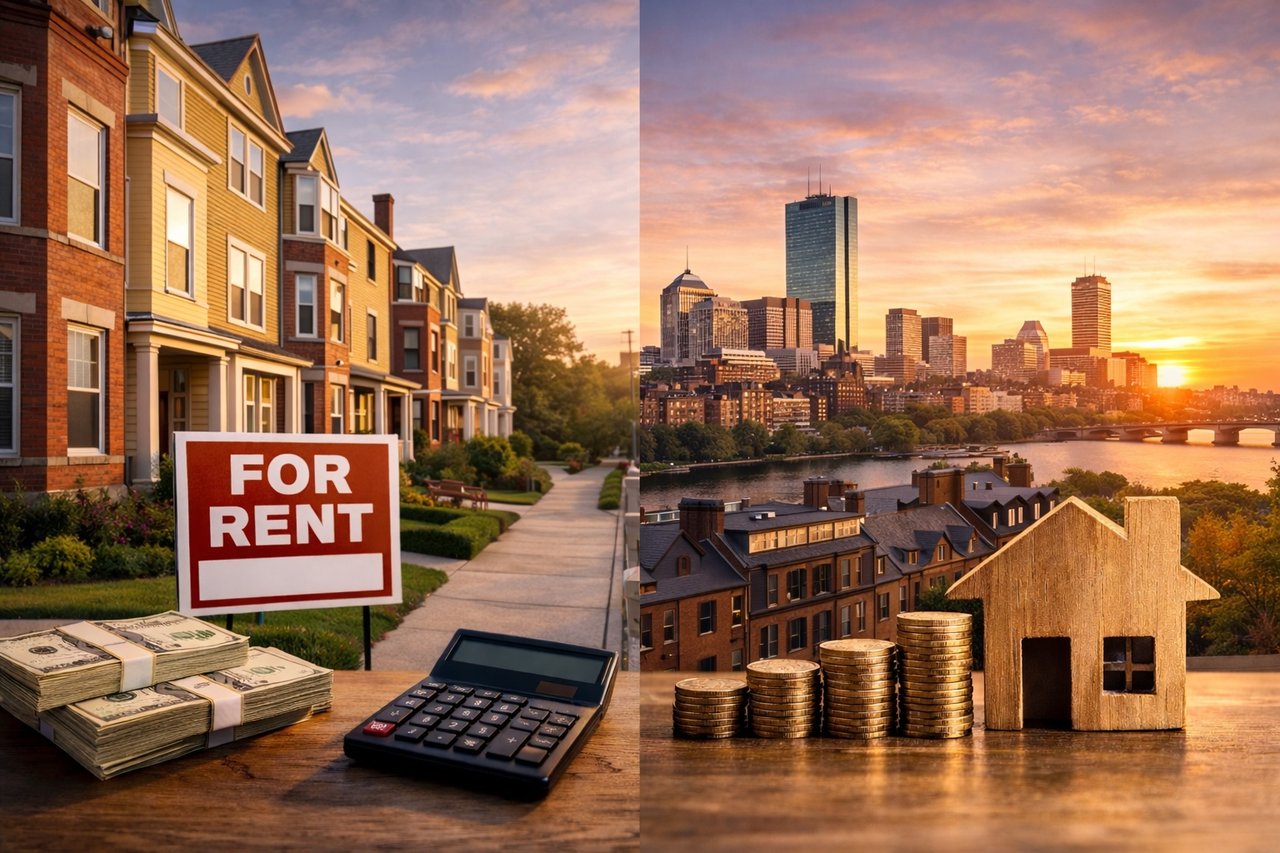
If you’re investing in real estate in 2026, the decision usually comes down to one question.
Do you want income now, or are you willing to wait for growth later?
There’s no universal right answer. The mistake is choosing a strategy based on headlines or rate predictions rather than on how deals actually behave over time.
The simple difference
Cash flow is the property's income minus expenses, paid to you monthly.
Appreciation means you’re betting the property will be worth more in the future.
Most investors end up with a mix. Problems start when people think they’re doing one while actually relying on the other.
Cash flow, grounded in today’s reality
Cash flow is about the margin for error. You’re buying something that still works when financing isn’t perfect, and expenses rise.
In 2026, interest rates may rise or fall. What’s far more certain is this: cheap money is no longer something you can assume.
Cash flow tends to fit people who:
- Want income or stability
- Need properties to stand on their own
- Prefer predictable outcomes
- Don’t want their strategy to depend on refinancing timing
Cash flow still exists, but it usually shows up in:
- Less trendy markets
- Conservative purchase prices
- Deals that survive higher-rate scenarios
The tradeoff is slower appreciation in many cases and hands-on management. You’re paid for discipline, not optimism.
Appreciation, without relying on rate cuts
Appreciation investing is about patience and strong fundamentals. You’re buying where long-term demand exceeds supply, regardless of short-term rate movement.
This tends to work best for people who:
- Earn income outside the property
- Can carry a property if cash flow is thin
- Are focused on long-term net worth
- Aren’t forced to sell on a schedule
Interest rates matter here, but they’re not the whole story. Appreciation is driven more by:
- Job growth
- Population trends
- Zoning and housing supply
- Infrastructure and livability
The risk is timing. Appreciation is real, but it is not guaranteed on your schedule. If a deal only works because you expect lower rates soon, that’s speculation.
What most investors eventually learn
Very few investors stay fully cash-flow or fully appreciation-oriented forever.
Most end up with a blend:
- Cash-flowing properties for stability
- Appreciation-focused properties for growth
The order matters. Cash flow first creates flexibility. Appreciation without a cushion creates pressure.
How interest rate uncertainty should shape decisions
Instead of asking where rates will be, a better question is whether the deal works if rates stay roughly where they are.
Smart underwriting in 2026 looks like this:
- Assume financing stays relatively tight
- Treat lower rates as upside, not a requirement
- Avoid deals that only work under perfect conditions
When rates are uncertain, weak deals are quickly exposed. That’s not a problem. It’s a filter.
How I frame this decision
I don’t ask clients which strategy sounds better. I ask:
- Do you need income now or later?
- Can you support a property if it underperforms?
- Are you optimizing for flexibility, growth, or legacy?
- How long are you willing to wait to be right?
Those answers matter more than rate forecasts.
FAQ
What’s the difference between cash flow and appreciation?
Cash flow is the monthly income after expenses. Appreciation is long-term value growth.
Are interest rates expected to be higher or lower in 2026?
No one knows. Most projections suggest rates may ease from recent highs but remain above the ultra-low levels of the past decade.
Is cash flow still possible if rates stay elevated?
Yes, but it requires conservative buying and realistic assumptions. Easy deals are gone. Durable ones still exist.
Is appreciation riskier in an uncertain rate environment?
It can be if the deal depends on refinancing or short-term price growth. Appreciation works best when demand drivers are long-term.
What should newer investors focus on?
Many benefit from starting with cash flow or break-even deals. It reduces pressure and keeps options open.
- Cash flow keeps you in the game.
- Appreciation changes the score over time.
The real risk isn’t choosing the wrong strategy. It’s building one that only works if the world cooperates.