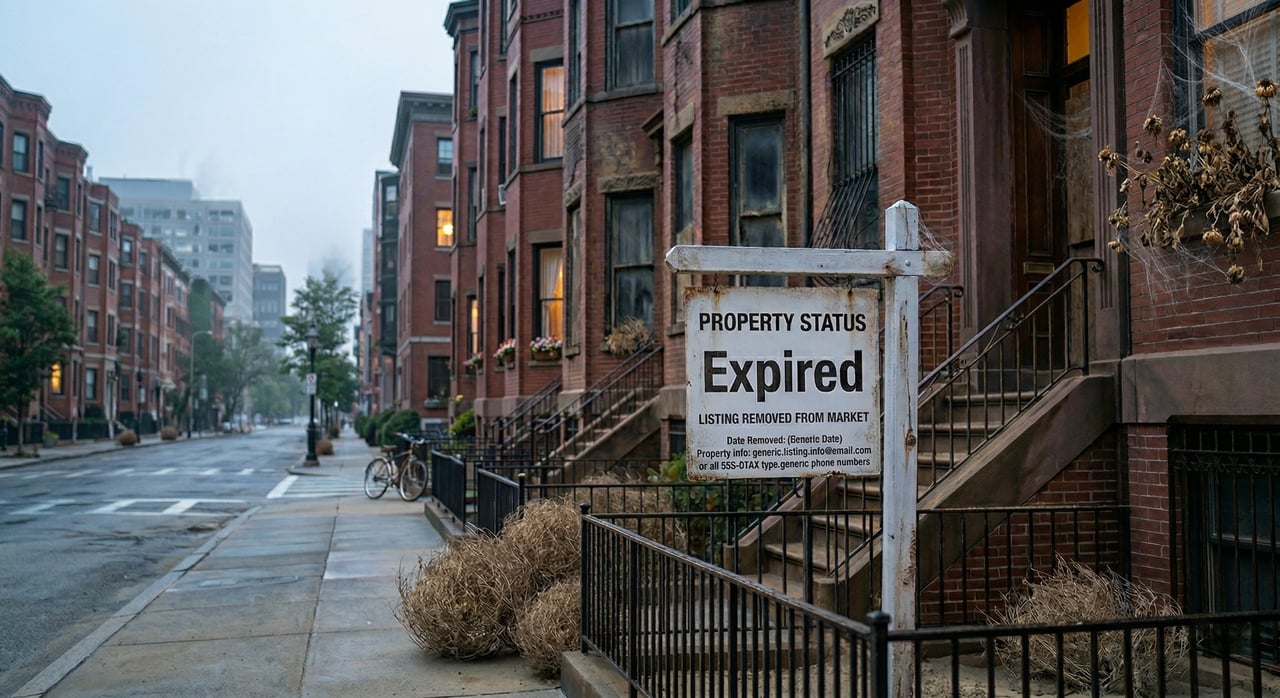
If your Boston home listing expired without a sale, it was likely due to a misalignment in three areas: Price, Presentation, or Promotion. Identifying the mismatched part of the market is the first step to achieving a successful re-listing. This approach helps you return to the market with a clear, data-driven plan. It avoids repeating past frustrations.
Watching a listing languish and expire leaves any homeowner feeling disheartened. You invested time, energy, and hope into the sale, only to find yourself back at the starting line. But an expired listing isn't an ending; it's a critical data point. It provides valuable market feedback that, when analyzed accurately, can illuminate the path to a successful sale. Don't blame a single factor. Instead, conduct an honest, 360-degree review of your strategy.
What are the main reasons a home doesn't sell?
In real estate, we often refer to the "Three P's" that determine a home's success on the market: Price, Presentation, and Promotion. When a home fails to sell, the cause can almost always be traced back to a weakness in one or more of these areas. Think of them as the three legs of a stool; if one is too short or weak, the entire structure becomes unstable.
- Price: This is the most common and powerful factor. A price that is not aligned with the current market value will deter buyers before they even see the property.
- Presentation: This includes the home's condition, cleanliness, and professional staging and photography. It's about how your home shows, both online and in person.
- Promotion (Marketing): This strategy exposes your home to the largest possible pool of qualified buyers. It goes far beyond simply putting a sign in the yard and listing it on the MLS.
Diagnosing the issue requires a thorough examination of all three aspects. Changing one element, like the agent, won't likely change the outcome. You need to address core pricing or condition issues, too.
How can I assess my home's pricing without bias?
Pricing goes beyond your sales goals or your neighbor's home sale from last year. It directly reflects the current supply and demand. The Boston market of 2026 has its own unique dynamics, distinct from the frenzied pace of past years. An objective price analysis involves looking at the market through a buyer's eyes.
To diagnose your pricing strategy, consider the following data points:
- Original Comparative Market Analysis (CMA): Look again at the comparable sales that helped set your initial price. Were they similar in location, size, condition, and amenities? Were they recent enough to be relevant (ideally sold within the last 3-6 months)?
- Market Shifts: Did you notice any changes in the market while you were listed? What buyers are willing to pay can change. This happens due to more local inventory, shifting mortgage rates, or seasonal slowdowns. A price that might have been achievable in the spring may be too high by late fall.
- Showing and Offering Activity: The market provides direct feedback. A total lack of showings usually means the price is way off from what buyers expect. If you had many showings but no offers, your price might be right. However, the perceived value, often linked to the condition, doesn't match the asking price. Lowball offers can be frustrating, but they also provide useful data. They show the price range buyers see for your home.
- Absorption Rate: This shows how quickly homes are selling in your area, such as Roslindale or Hyde Park. If the average days on market is 30 and your home was on the market for 90 or 180 days, it shows it wasn't set up to compete well. Price is likely the main issue.
A good re-listing strategy begins with a fresh CMA. This should show today's market, not the one from six months ago. Detach from the old number and focus on what the current data shows.
Was my home's presentation holding it back?
Presentation is how your property makes a buyer feel. In an online-first world, your home's digital debut is the most critical showing. If buyers aren't captivated by the photos, they will never book a tour. A great presentation builds an emotional connection. It helps buyers see themselves in the space.
Evaluate your home's presentation with these questions:
- Photography and Videography: Were your listing photos professional? Did they use high-res images, good lighting, and wide-angle lenses to show the space accurately? Were there enough photos to tell a complete story? In competitive Boston neighborhoods, professional photos, video walkthroughs, and floor plans are expected.
- Condition and Repairs: Did minor repairs suggest that maintenance was neglected? Leaky faucets, cracked tiles, and scuffed walls can signal bigger problems to buyers. These small fixes often have a massive return on investment by boosting buyer confidence.
- Staging and Decluttering: Was your home presented in its best light? This doesn't always mean expensive professional staging. Keep it simple by deep cleaning, decluttering surfaces, removing personal photos, and rearranging furniture. This helps create a sense of space. Buyers need to be able to mentally move their own belongings in, which is hard to do in a cluttered or overly personalized environment.
- Showability: How accessible was your home for showings? Strict showing schedules can keep qualified, eager buyers from entering. In a balanced market, flexibility is key.
How does marketing strategy affect a home's sale?
A solid marketing plan aims for maximum exposure and demand. An expired listing may occur when a passive marketing strategy relies too heavily on the MLS. Keep in mind that the goal is not just to find a buyer, but to find the best buyer by reaching the largest possible audience.
A robust promotion strategy should include:
- High-Quality MLS Listing: Essential. Include a full set of professional photos and a strong property description. Highlight key features and benefits, such as proximity to the Arnold Arboretum in Jamaica Plain or the commuter rail in West Roxbury. Provide complete and accurate information.
- Syndicated Digital Presence: Your listing must appear correctly on major real estate sites. This includes Zillow, Redfin, and Realtor.com, where buyers search.
- Targeted Outreach: Proactive marketing means reaching out to brokers with qualified buyers in your area. It also involves targeted ads on social media and other platforms to reach potential buyers.
- Open House Strategy: Effective open houses are not just for curious neighbors. They offer serious buyers a chance to experience the home. Keep the strategy consistent and well-promoted.
When looking at issues, check how your property appeared online. Also, see what steps were taken to attract attention after the MLS launch.
Should I re-list immediately or take a break?
Once you've pinpointed why your home didn't sell, you must decide: re-list now or take a break and reset. Each option has trade-offs, and the best choice depends on your timeline and intended changes.
Option 1: Re-list Immediately.
Pros: You can reach active buyers who may have already viewed your home. If pricing were the main issue, a quick price change could spark new interest.
Cons: If you re-list without major changes, buyers may view it as "stale." They might question what's wrong and think you're not motivated to sell. Best for: Sellers who spot a clear pricing mistake and can adjust quickly. Also, those needing minor updates, like new photos, are easy to make.
Option 2: Temporarily Withdraw and Re-list Later
Pros: This option gives you time to make key improvements, such as painting or refinishing floors. You can also tackle inspection issues. This gives you a fresh start and resets the days on the Market clock in the MLS.
Cons: You might miss a motivated buyer who is ready now. Market conditions can change while you pause. They might improve, but they could also weaken.
Best for: Sellers who need to address major presentation issues. It's also good for those who want to wait for a better seasonal market, like pulling a home in winter to re-list in spring. Lastly, it suits anyone needing a break from market stress.
What does a successful re-listing strategy involve?
A successful re-listing is a full-blown relaunch, not just a renewal of the old listing. It's a great opportunity to reintroduce your property to the market from a position of strength, armed with the feedback you've gained.
The key elements of a powerful relaunch are:
- A New, Data-Driven Price: Set the home's price based on a fresh CMA for the 2026 market.
- Refreshed Presentation: This means new professional photos. Ideally, fix any condition or staging issues noted in your diagnosis.
- A Fresh Narrative: Rewrite the listing description to showcase the home's best features and any improvements made. It's all about telling a new story.
- A Proactive Marketing Plan: Launch the new listing with energy. This includes announcing to local brokers, creating a new open house schedule, and starting fresh digital marketing campaigns.
A successful relaunch brings in new buyers and encourages past onlookers to reconsider. It positions your property to attract strong offers. Remember, in Massachusetts, sellers cannot ask buyers to waive their right to a home inspection. So, winning offers depend on excelling in price, presentation, and marketing. This makes your property the clear choice, prompting buyers to compete on terms like financing, appraisal gaps, and closing flexibility.
An expired listing feels like a failure, but it's really a market test that didn't succeed. By diagnosing the reasons, you can develop a new strategy that tackles core issues and sets you up for the success you wanted from the start.
Ready to map out your next move? Schedule a strategy call to walk through your options.
Frequently Asked Questions
- How long should I wait before re-listing my expired Boston property? There's no set time. If you're changing the price, re-list right away. If you want to make improvements or reset the days-on-market, waiting 60 to 90 days can be a smart move.
- Do I have to use the same listing price when I re-list my home? No, and it's better not to. An expired listing shows the market thought your original price was too high. A successful re-list usually means adjusting the price based on a fresh market analysis.
- Will buyers see that my home was listed before? Yes, buyers and their agents can check a property's history on the MLS. That's why it's important to relaunch with a clear change in strategy, such as a new price or presentation, to show you're serious about selling.
- Is it better to sell my home as-is or make improvements? It depends on the improvements and your target buyer. Small fixes, like paint and new light fixtures, often provide a good return. For larger renovations, weigh the costs against the potential increase in value before deciding.
- Can I switch agents and expect a different result? A new agent can offer fresh ideas and better marketing, which is important. But if you don't stress price or condition, even the best agent may struggle. The best approach combines a new strategy with a new agent for a strong relaunch.
Ready to Re-list Successfully? Book a Free Strategy Session Today – Avoid past mistakes with a customized 2026 Boston market plan.