· By Juan Murray
Boston Demolition Delay: What Older-Home Sellers Should Know
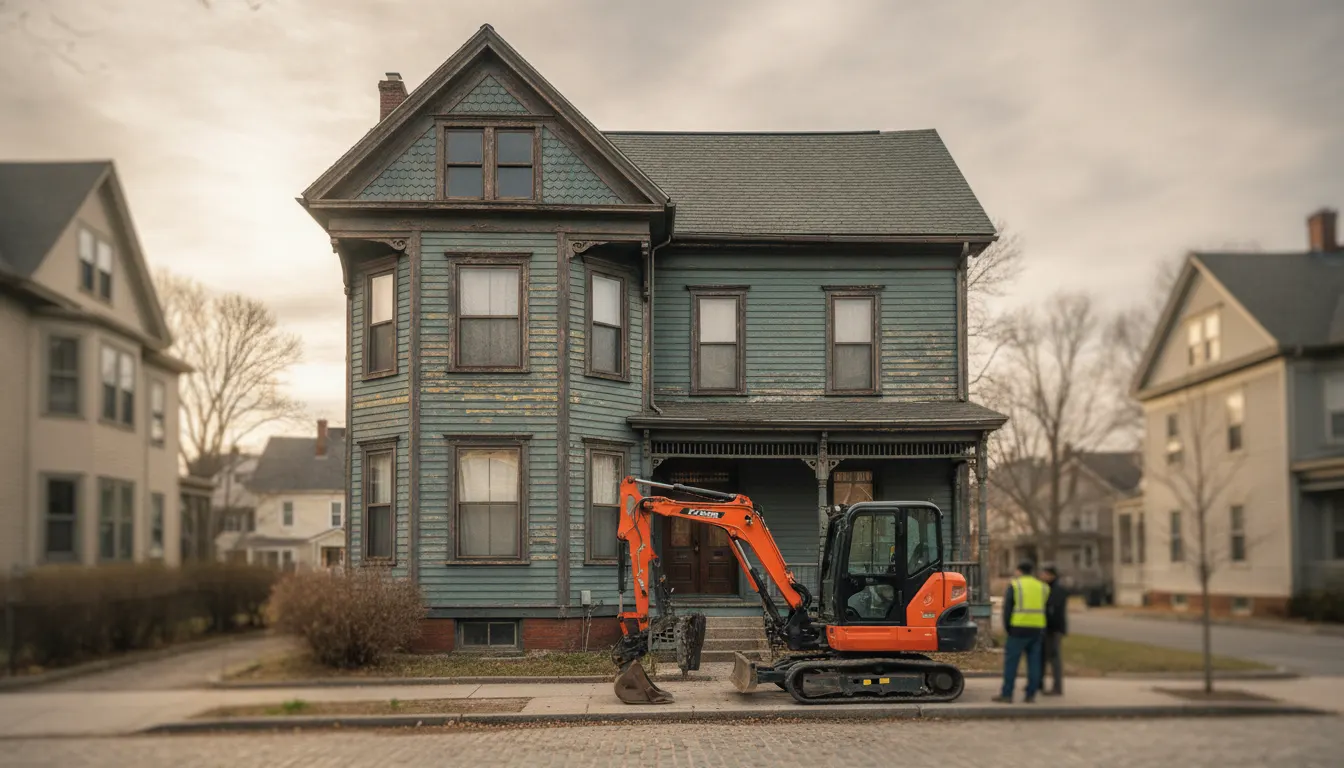
If your Boston home is at least 50 years old and your buyer plans to tear it down, Article 85 review by the Boston Landmarks Commission can hold up the demolition permit, including a possible delay of 90 days after a public hearing. That can push your closing date, shape your Purchase and Sale Agreement, and lower what a developer will pay, so plan for it before you accept an offer.
Does Boston's demolition delay affect selling an older home to a buyer who plans to tear it down?
Yes. Under Article 85 of the Boston Zoning Code, a building in Boston's neighborhoods that is at least 50 years old goes through Boston Landmarks Commission review before a demolition permit can be issued. If staff find the building significant and the commission then votes for a delay after a public hearing, Inspectional Services cannot issue the demolition permit until 90 days after the hearing closes. The review is usually the buyer's job to navigate, but it directly affects your closing date, your Purchase and Sale Agreement terms, and how much a developer or investor is willing to pay.
If your Jamaica Plain, Roslindale, Hyde Park, Dorchester, or Roxbury home is old enough to be a teardown candidate, a city review process can change your timeline before you ever list. Many owners of older triple-deckers and single-families never hear about it until a buyer's attorney brings it up mid-transaction.
Here's what the process is, what it looks like on a current Jamaica Plain application, and how to protect your sale if your buyer plans to demolish.
Key Takeaways
- Article 85 covers buildings in Boston's neighborhoods that are at least 50 years old, and every building in Downtown and the Harborpark.
- Staff decide significance within 10 days of a complete filing, and the commission's hearing determination is due within 40 days of filing.
- A required delay means no demolition permit until 90 days after the hearing closes, so the path on paper can run roughly four months.
- Even a property with no historic protections, like 45 Yale Terrace in Jamaica Plain, goes through the review and hearing.
- Keep the building secured during review: a significant building demolished in violation of Article 85 can bar new construction permits for two years.
What does Boston's Article 85 demolition delay require?
Review by the Boston Landmarks Commission before a demolition permit can be issued for a covered building. Article 85 is Boston's demolition delay rule. Outside Downtown and the Harborpark, where every building is covered, it applies to buildings in the neighborhoods that are at least 50 years old, and to buildings inside a Neighborhood Design Overlay District. Designated Landmarks and buildings in local historic districts, including the Beacon Hill and Back Bay districts, are reviewed under separate rules.
Here's the sequence for a building that qualifies:
- Application: Review starts either with an early request to the Landmarks Commission or automatically when a demolition permit application is filed with Inspectional Services, which forwards it to the commission. If the applicant isn't the owner of record, the owner co-signs.
- Staff determination: Commission staff issue a notice of whether the building is significant within 10 days of filing. The city notes the 10-day review does not start until the application is complete.
- Public hearing: If staff find the building significant, the commission holds a public hearing and must issue its determination within 40 days of filing. The applicant presents alternatives to demolition at the hearing.
- The delay: If the commission requires a delay, Inspectional Services cannot issue the demolition permit until 90 days after the close of the hearing, unless the commission finds earlier that there is no feasible alternative to demolition.
Add those up and the path on paper can run roughly four months from a complete application to permit. That's longer than many Massachusetts closings.
Staff find a building significant if it meets any one of several tests. Those include being listed in the commission's survey as on, recommended for, or pending for the National Register of Historic Places; being the subject of a landmark petition; historic or architectural significance because of period, style, construction method, or association with a notable architect or builder; an important association with historic persons or events; or a finding that losing it would significantly harm the historical, architectural, or urban design character of the neighborhood. An 1870s mansard house can qualify. So can an ordinary early-1900s triple-decker if staff decide it does.
What does an Article 85 review look like in Jamaica Plain right now?
45 Yale Terrace is a current example. The city has posted a notice that the Landmarks Commission received a complete Article 85 application to demolish 45 Yale Terrace in Jamaica Plain. The notice says the property has no historic protections, and it lists the proposal for discussion at the commission's November 10, 2026 public hearing.
That's the point for sellers. A property with no designation still goes through the review, a public hearing, and the possibility of a 90-day delay. If a buyer were waiting on that permit with a closing clock running, the Purchase and Sale Agreement would need room for it.
What happens if the city misses its Article 85 deadlines?
The permit is no longer held up by Article 85 on that ground. There's a counterweight worth knowing. Article 85 says that if Inspectional Services hasn't received the staff notice within the 10-day period, or the commission's hearing determination within the 40-day period, the permit is no longer held up by Article 85 on that ground. That helps applicants who keep careful records of filing dates and notices. The sensible planning assumption is still that the review can run long, and that a strong paper trail matters.
How does a demolition delay change my home sale?
It can affect your closing date, your price, and your responsibilities while the review runs. Article 85 mostly lands on the buyer, since the buyer is usually the one who wants the demolition permit. It still affects you in three ways.
Your closing date. If your buyer needs a demolition permit before closing, the Purchase and Sale Agreement has to account for a review that could stretch past a typical closing window. Extensions should be written in, not promised verbally.
Your price. A developer or investor prices in the risk of delay, carrying costs, and the chance the commission asks for a redesign. A property with an open Article 85 question usually draws a more cautious offer than one where the review is already finished, or where staff have already found the building not significant.
Your responsibility while the process runs. The applicant, or the owner of record if different, is responsible for securing the building while it is under review. If a significant building is subject to a delay and isn't secured, losing it to fire or another cause is treated as a voluntary demolition. For a significant building demolished in violation of Article 85, Inspectional Services cannot issue a building permit for new construction on the premises, or most use or occupancy permits, for two years. If you own the property during the review, keep it secured, insured, and maintained.
What should I do before accepting an offer from a buyer who plans to demolish?
Check the age, ask what the buyer plans, and negotiate the contingency.
- Check the age. If the building is 50 years or older, assume Article 85 applies until the Landmarks Commission says otherwise.
- Ask what the buyer plans. Demolition, a gut renovation, and an addition can each trigger different permit paths. Know which one you're selling into.
- Negotiate the contingency. If the buyer wants a demolition permit contingency, agree on a firm outside date and who pays carrying costs if the review runs long.
- Consider early review. Article 85 lets an applicant request review before a demolition permit application is filed, and the owner co-signs if someone else applies. That can turn an unknown into a known for the buyer. Talk to your attorney about whether it fits your situation.
- Review your disclosure posture. Concealing known issues creates its own risk. The guide to selling a multi-family with an unpermitted unit covers how permit history interacts with a sale.
If the sale is tied to a bigger project on your street, what new development means for your Jamaica Plain home's value is a useful companion.
Juan Murray is a real estate broker, not an attorney, so have your closing attorney confirm how Article 85 applies to your address and your contract. In Juan's experience, sellers who ask about this before listing keep more of their leverage than those who find out at the Purchase and Sale stage.
FAQ
What buildings does Boston's demolition delay apply to?
Every building in Downtown and the Harborpark, and in the neighborhoods, buildings at least 50 years old and buildings inside a Neighborhood Design Overlay District. Designated Landmarks and buildings in local historic districts are covered by separate review.
How long can Boston delay a demolition permit?
If the Landmarks Commission requires the delay, Inspectional Services cannot issue the permit until 90 days after the close of the public hearing. Because the hearing determination is due within 40 days of filing, the path on paper runs roughly four months from a complete application to permit.
Do I have to file for demolition review before selling my house?
No. Article 85 review starts when someone applies, typically the buyer or a developer when they seek a demolition permit. An applicant can request early review, and the owner of record co-signs if the applicant is someone else. Ask your attorney whether that makes sense for your property.
Can a Boston house be blocked from demolition altogether?
Article 85 itself is a delay, not a ban: the commission can find no feasible alternative and allow the permit early, or the delay runs out. Designation as a Boston Landmark is a separate process with its own protections. The outcome depends on the building and the alternatives proposed.
What happens if an old building burns down during the delay period?
Under Article 85, if a significant building subject to a delay isn't secured and is lost to fire or another cause, the loss is treated as a voluntary demolition. That can bar new construction permits for the premises for two years, so keep the property secured and insured.
The bottom line: if your older Boston home could be a teardown, build Article 85 review into your Purchase and Sale Agreement with a firm outside date before you accept an offer.
Sources
- Boston Zoning Code, Article 85 Demolition Delay (PDF)
- City of Boston, How to file for Article 85 demolition review
- City of Boston, Proposed demolition, Article 85 demo delay: 45 Yale Terrace, Jamaica Plain
Have questions? Let's connect.
About Juan Murray
Juan Murray is a Boston broker associate with more than 30 years of experience helping buyers, sellers, and investors across Greater Boston, personally leading every transaction from the first conversation through closing.
RE/MAX Real Estate Center · (978) 581-0801
Equal Housing Opportunity. Juan Murray is licensed as a Broker in Massachusetts, regulated by the Massachusetts Board of Registration of Real Estate Brokers and Salespersons. This article is general information only and does not constitute legal, tax, or financial advice. Confirm your specific costs and obligations with your closing agent, tax advisor, or lender.