· By Juan Murray
Capital Gains Tax When Selling a Home in Massachusetts
When you sell your main home, federal law lets you exclude up to $250,000 of gain ($500,000 for most married couples filing jointly) if you owned and lived in the home for at least 2 of the 5 years before the sale, and Massachusetts follows that exclusion. If your gain fits within it, you owe no capital gains tax on the sale. Taxable long-term gain above the exclusion is taxed by Massachusetts at 5%. Massachusetts also adds a 4% surtax on taxable income above an annual threshold, which is $1,107,750 for tax year 2026, and the taxable part of a home sale gain counts toward it.
How does capital gains tax work when you sell a home in Massachusetts?
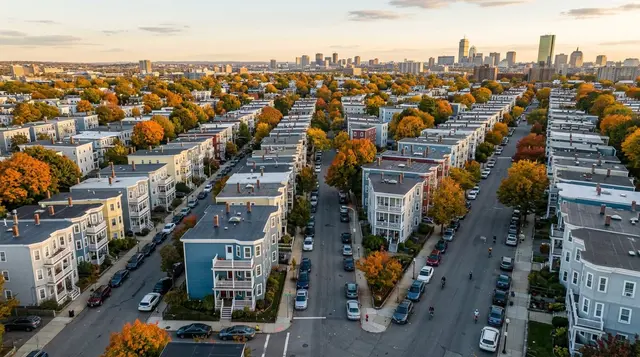
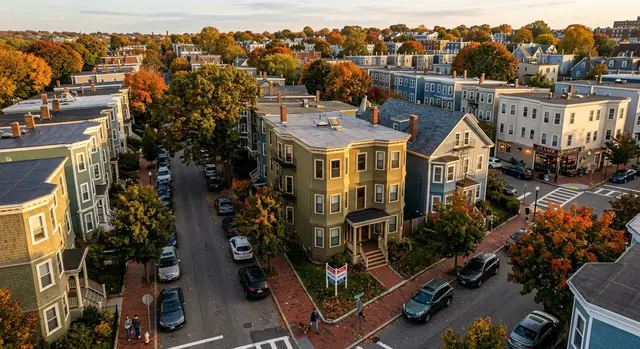
You figure your gain over your adjusted basis, subtract the home sale exclusion, and Massachusetts taxes any remaining long-term gain at 5%, plus the 4% surtax above the annual threshold. If you've owned your home in Jamaica Plain, Roslindale, Hyde Park, Dorchester, or Roxbury for more than a decade, you may have built up significant equity. Many owners owe nothing, but some long-term owners face a taxable gain they didn't expect. In Jamaica Plain (ZIP 02130), the median single-family sale price was $1,435,000 and the median multi-family sale price was $1,430,000 from September 2025 through August 2026, according to MLS Property Information Network (MLS PIN) data via Repliers. As an example, a home bought for $350,000 that sells for $750,000 has a $400,000 gain before costs and improvements. Understanding what gets taxed is worth doing before you decide to sell. For a full breakdown of the costs that come off your proceeds at closing, see how much you'll net selling your home in Boston. If you own a multi-family, selling a two- or three-family in Boston covers depreciation recapture, which the home sale exclusion does not cover.
Key Takeaways
- You can exclude up to $250,000 of gain ($500,000 for most married couples filing jointly) if you owned and lived in the home for at least 2 of the 5 years before the sale, and Massachusetts follows that exclusion.
- Your adjusted basis includes the purchase price, certain closing costs you paid when you bought, and capital improvements, so keep permits and invoices.
- Massachusetts taxes long-term gains at 5% and short-term gains at 8.5%.
- The 4% Massachusetts surtax applies to taxable income above $1,107,750 for tax year 2026, and the taxable part of a home sale gain counts toward it.
- MA tax stamps, $4.56 per $1,000 of sale price, are a closing cost and a separate calculation from capital gains tax.
How does the home sale exclusion work?
It removes up to $250,000 of gain, or $500,000 for qualifying married couples, from taxable income. Federal tax law (IRS Publication 523) lets you exclude part of your home sale profit from taxable income if you meet two tests. The ownership test: you owned the home for at least 2 of the 5 years before the sale. The use test: you lived in it as your main home for at least 2 of those 5 years. The time doesn't need to be continuous. Single filers can exclude up to $250,000 of gain. Married couples filing jointly can exclude up to $500,000 if at least one spouse meets the ownership test and both meet the use test. You generally can't use the exclusion if you excluded gain on another home sold in the 2 years before this sale. Massachusetts conforms to this federal exclusion. For example, if you bought a condo for $380,000 and sell it for $720,000, your gain is roughly $340,000 before costs. A qualifying married couple would exclude all of it. A single filer would exclude $250,000, leaving $90,000 potentially taxable.
What Counts as Your Profit?
Your taxable gain isn't simply the sale price minus the purchase price. Your adjusted basis includes the purchase price, certain settlement and closing costs you paid when you bought (such as legal fees, recording fees, transfer taxes, and owner's title insurance, but not loan costs like points), and capital improvements such as a new roof, an addition, or a full kitchen renovation. Routine repairs don't count. As an example, if you bought a home for $450,000, paid $15,000 in qualifying closing costs, and later spent $80,000 on an addition, your adjusted basis is $545,000, not $450,000. Keep your permits and contractor invoices, and ask a CPA or tax attorney to confirm what qualifies.
What are the Massachusetts capital gains tax rates on a home sale?
5% on long-term gains and 8.5% on short-term gains. If part of your gain is taxable after the exclusion, Massachusetts taxes long-term gains (home held more than one year) at 5%. Short-term gains (held one year or less) are taxed at 8.5%. Federal rates are separate: long-term gains are taxed at 0%, 15%, or 20% depending on your taxable income, and short-term gains are taxed as ordinary income.
Does the Massachusetts millionaire surtax apply to a home sale?
It can. Massachusetts voters approved a 4% surtax in 2022 on taxable income above $1,000,000, with the threshold adjusted each year for inflation (M.G.L. c.62 §4). For tax year 2026, the threshold is $1,107,750. The taxable part of your home sale gain counts toward that total. If your taxable gain plus your other income for the year pushes you over the threshold, the amount above it is taxed at an additional 4%, so a long-term gain in that range is taxed at 9% in Massachusetts. Confirm the current threshold with your tax advisor before you set a listing date.
When might you owe no capital gains tax on a home sale?
A few situations where you may owe little or nothing even with a significant gain: you qualify for the full exclusion and your gain is under the limit; your adjusted basis is higher than you think once documented improvements are counted; or you inherited the property, in which case your basis is generally its fair market value on the date of death, which can sharply reduce the gain on a later sale.
Are capital gains tax and MA tax stamps the same thing?
No. MA tax stamps (the deed excise) are a closing cost of $4.56 per $1,000 of sale price, customarily paid by the seller and deducted from proceeds at closing. On a $900,000 sale, that's about $4,100. Capital gains tax is an income tax reported on your annual return, based on your profit above your adjusted basis and any exclusion. It is a separate calculation from anything paid at closing.
FAQ
Do I owe capital gains tax when I sell my primary home in Massachusetts?
Often not. If you owned and lived in your home as your main home for at least 2 of the 5 years before the sale, you can exclude up to $250,000 of gain ($500,000 for qualifying married couples filing jointly). Massachusetts conforms to this federal exclusion. If your gain falls within those limits, you owe no capital gains tax on the sale to the IRS or to Massachusetts.
What is the capital gains tax rate on a home sale in Massachusetts?
Long-term gains on a home held more than one year are taxed at 5% in Massachusetts. Short-term gains on a home held one year or less are taxed at 8.5%. Federal long-term rates are separate and are 0%, 15%, or 20% depending on income.
What is the Massachusetts surtax, and does it apply to home sales?
Massachusetts adds a 4% surtax on taxable income above an inflation-adjusted threshold, $1,107,750 for tax year 2026. The taxable part of your home sale gain counts toward that threshold. Long-term gain above the threshold is taxed at 9% in Massachusetts instead of 5%.
Can home improvements reduce my capital gains tax?
Yes. Capital improvements such as additions, a new roof, or a kitchen remodel are added to your basis, and a higher basis means a lower taxable gain. Keep permits, contracts, and receipts to support your basis when you file.
How is capital gains tax different from the MA tax stamps sellers pay at closing?
MA tax stamps (the deed excise) are a closing cost paid at closing and deducted from your proceeds. Capital gains tax is an income tax you report on your annual return, based on your profit above your adjusted basis and any exclusion. The two are independent calculations.
The bottom line: many Massachusetts owners selling a main home owe no capital gains tax if their gain fits within the exclusion, but long-term owners with large gains should run the numbers with a tax advisor before they list.
Sources
- IRS Publication 523, Selling Your Home: https://www.irs.gov/publications/p523
- IRS Topic No. 409, Capital Gains and Losses: https://www.irs.gov/taxtopics/tc409
- M.G.L. c.62 §4 (income tax rates and the 4% surtax): https://malegislature.gov/Laws/GeneralLaws/PartI/TitleIX/Chapter62/Section4
- Massachusetts Tax Expenditure Budget, exclusion of capital gains on sale of a principal residence: https://budget.digital.mass.gov/govbudget/fy26/tax-expenditure-budget/personal-income-tax/exclusions-from-gross-income/1-021
- Morkel Financial, Massachusetts surtax thresholds by year (citing the Massachusetts Department of Revenue): https://morkelfinancial.com/blog/massachusetts-millionaire-surtax-2026
- M.G.L. c.64D §1 (deed excise): https://malegislature.gov/Laws/GeneralLaws/PartI/TitleIX/Chapter64D/Section1
- MLS Property Information Network (MLS PIN) via Repliers, September 2025 through August 2026
Have questions? Let's connect.
About Juan Murray
Juan Murray is a Boston broker associate with more than 30 years of experience helping buyers, sellers, and investors across Greater Boston, personally leading every transaction from the first conversation through closing.
RE/MAX Real Estate Center · (978) 581-0801
Equal Housing Opportunity. Juan Murray is licensed as a Broker in Massachusetts, regulated by the Massachusetts Board of Registration of Real Estate Brokers and Salespersons. This article is general information only and does not constitute legal, tax, or financial advice. Confirm your specific costs and obligations with your closing agent, tax advisor, or lender.