· By Juan Murray
Selling a Two-Family or Three-Family Home in Boston: What Sellers Need to Know
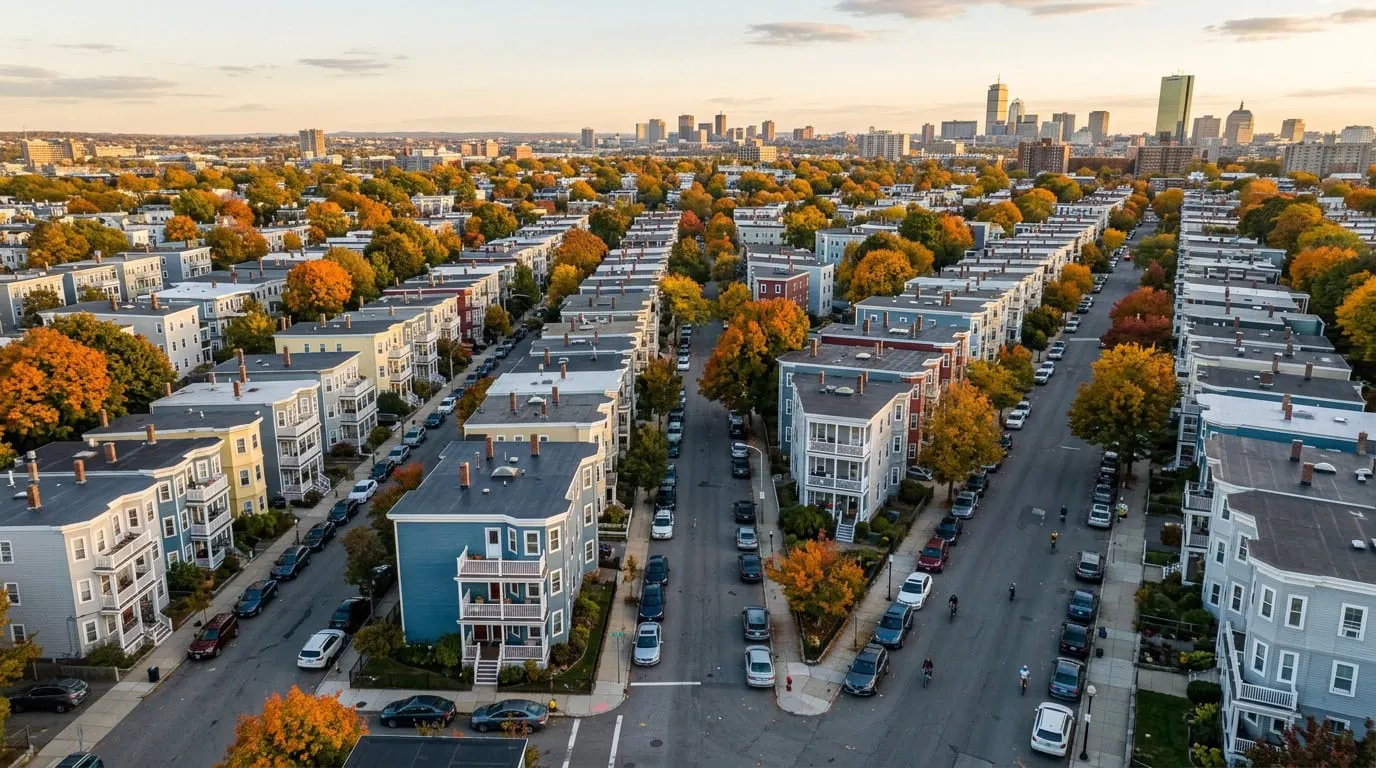
Selling a multi-family home in Boston takes more preparation than a single-family sale. Sellers have to work within Massachusetts tenant law, transfer security deposits to the buyer at closing, prepare a rent roll, and coordinate showings around occupied units. In Jamaica Plain, Roslindale, Hyde Park, and Dorchester, where two-families and triple-deckers are a large share of the housing stock, preparation shapes how buyers and their lenders respond.
What Do Sellers Need to Know When Selling a Two-Family or Three-Family Home in Boston?
If you own a two-family, three-family, or triple-decker in Jamaica Plain, Roslindale, Hyde Park, or Dorchester, you are selling into an active market. Over the 12 months from September 2025 through August 2026, the median multi-family sale price was $1,430,000 in Jamaica Plain (02130, 35 sales, median 25 days on market), $1,025,000 in Roslindale (02131, 35 sales), $943,750 in Hyde Park (02136, 28 sales), and $1,200,000 across Dorchester (199 sales, median 27 days on market), according to MLS PIN data. But selling a multi-family property is not the same as selling a single-family property. The process has more layers, the documentation is more involved, and the decisions you make in the months before you list affect what you walk away with at closing. For a breakdown of closing costs, see how much you'll net selling your home in Boston, or run your own numbers with the net proceeds estimate. If you've owned the property for years and taken depreciation as a landlord, review Massachusetts capital gains tax and depreciation recapture with your accountant before you commit to a list date.
Key Takeaways
- In Massachusetts, a sale does not end a tenancy: the new owner takes the property subject to the tenancies in place.
- Under M.G.L. c.186 §15B, the seller must transfer each security deposit with its accrued interest to the new owner.
- Over the 12 months from September 2025 through August 2026, the median multi-family sale price was $1,430,000 in Jamaica Plain, $1,025,000 in Roslindale, $943,750 in Hyde Park, and $1,200,000 across Dorchester (MLS PIN).
- Have the rent roll, leases, security deposit accounting, expense records, smoke and carbon monoxide certificates, lead paint notification, and permit records ready before you list.
- Massachusetts deed excise is $4.56 per $1,000 of the sale price outside Barnstable County, or $5,472 on a $1,200,000 three-family.
How do tenants affect selling a multi-family home in Boston?
They shape your buyer pool, timeline, and pricing, because a sale does not end a tenancy. The single factor that shapes everything else in a multi-family sale is who's living there and on what terms. In Massachusetts, a sale does not end a tenancy. The new owner takes the property subject to the tenancies in place, which affects your buyer pool, timeline, and pricing.
Tenancy at will (month-to-month). Under M.G.L. c.186 §12, when rent is paid monthly, a tenancy at will can be ended with written notice equal to the interval between rent days or 30 days, whichever is longer. This gives you more flexibility if you want to deliver a vacant unit to the buyer.
Fixed-term lease. If your tenant has a signed lease, the new owner must honor it until the end of the term. You can negotiate with a tenant to leave early, but you cannot unilaterally break a valid lease.
Cash for keys. A negotiated, written agreement in which the seller or the buyer pays a tenant to move out by a set date. It is voluntary on the tenant's part and is often the most practical path when a seller wants to deliver a vacant unit. Have your attorney draft it.
Security deposits. Under M.G.L. c.186 §15B, a landlord must hold security deposits in a separate, interest-bearing account, and when the property is sold, the seller must transfer each deposit with its accrued interest to the new owner. If your deposits are not in compliance, get your real estate attorney involved early.
Who buys two-family and three-family homes in Boston?
Two kinds of buyers: owner-occupants and investors, and each one looks at the building differently.
Owner-occupants plan to live in one unit and rent out the others. They can use owner-occupant financing that investors can't: HUD says an FHA loan, available on 1 to 4 unit properties, can be made with as little as 3.5% down, and conventional owner-occupant loans also allow lower down payments than investor loans. A vacant unit is often a selling point for this buyer.
Investors are buying for the return. They underwrite the property on the rent roll, expenses, and condition, often using a cap rate or gross rent multiplier. A building with leases in place at market rents carries less vacancy risk. Cash investors can move faster because they don't need a financing contingency. Most multi-family listings in these neighborhoods draw both buyer types, and how you price, position, and prepare the property affects which group responds.
What documents do you need before listing a multi-family home?
Gather the rent roll, leases, security deposit records, expenses, certificates, lead paint paperwork, and permit records.
- Rent roll. Each unit, the current monthly rent, lease type, and lease end date if applicable.
- Copies of all leases and tenancy agreements. The buyer's lender and attorney will review them.
- Security deposit accounting. The amount held for each tenant, the bank account, and accrued interest.
- Recent expense records. Utility costs, repair invoices, insurance premiums, and property tax bills for the last one to two years.
- Smoke and carbon monoxide certificates. In Boston, a smoke detector certificate is required at sale for residential buildings built before 1975 with one to five units, and a carbon monoxide certificate is required for residential sales regardless of age or size. The Boston Fire Department asks for at least 10 business days' notice, so apply as soon as the Purchase and Sale Agreement is signed. See the smoke and CO certificate guide.
- Lead paint disclosure. Many two-family and triple-decker homes in these neighborhoods were built before 1978. Sellers must give the buyer the Massachusetts Property Transfer Lead Paint Notification before the Purchase and Sale Agreement is signed, along with the federal pre-1978 disclosure. See lead paint disclosure for Massachusetts sellers.
- Permitted work documentation. Permits and certificates of occupancy for any work done on the property.
What happens to tenants who use rental assistance when you sell?
If any of your tenants pay rent with a housing voucher or other rental assistance, the new owner steps into that tenancy like any other. Your attorney should be involved early to coordinate with the housing agency on the change of ownership. Massachusetts law (M.G.L. c.151B §4(10)) bars discrimination against tenants who receive public or rental assistance, so a voucher can't be a reason to treat a tenant differently during or after the sale. For more on selling with tenants in place, including notice requirements and eviction timelines, see selling a rental property with tenants in Massachusetts.
What else should multi-family sellers in Boston know?
Plan for showings in occupied units, closing costs, taxes, and buyers who may want to convert.
Showing occupied units. M.G.L. c.186 §15B allows a landlord to enter a rented unit to show it to a prospective buyer when the lease provides for it. Give tenants advance notice and work around their schedules. A cooperative relationship with your tenants before you list makes showings easier.
Closing costs and tax stamps. Massachusetts deed excise is $4.56 per $1,000 of the sale price (outside Barnstable County), customarily paid by the seller. On a $1,200,000 three-family, that is $5,472 in tax stamps. Add attorney's fees and prorations. The net proceeds estimate puts it together.
Capital gains and depreciation recapture. If you have owned the property for years and taken depreciation, the IRS taxes unrecaptured section 1250 gain at a maximum 25% federal rate. In Massachusetts, income above $1,107,750 for tax year 2026 is subject to an additional 4% surtax, and a large sale can push you over it. Talk to your accountant before you list.
Buyers who plan to convert. If a likely buyer intends to turn the building into condos, tenant protections for conversions can affect what that buyer will pay. See condo conversion rules for Boston triple-decker sellers.
FAQ
Can I sell my two-family in Boston while tenants are still living there?
Yes. In Massachusetts, a sale does not end a tenancy. If your tenants have a fixed-term lease, the new owner must honor it. If they are tenants at will, the new owner takes over that tenancy. Sellers who want to deliver vacant units typically negotiate a cash-for-keys agreement or time the sale around a lease end.
Do I have to tell buyers about lead paint in my multi-family?
Yes, if the property was built before 1978. Under M.G.L. c.111 §197A, the seller must give the buyer the Property Transfer Lead Paint Notification before the Purchase and Sale Agreement is signed and allow at least 10 days for a lead inspection if the buyer wants one. Federal rules add a disclosure, a pamphlet, and a 10-day inspection opportunity. Under the state statute, an owner who fails to comply is liable for resulting damages and a penalty of up to $1,000, and the EPA says sellers who don't provide the federal disclosures may be subject to penalties.
What documentation does a buyer need to see for a multi-family in Boston?
Buyers and their lenders typically ask for the current rent roll, copies of all leases or tenancy agreements, security deposit records, recent expenses for utilities, insurance, taxes, and repairs, and documentation of permitted work. Having these organized before you list speeds up due diligence.
Do I need to give tenants notice when I am selling my home in Massachusetts?
Showings are governed by M.G.L. c.186 §15B and the terms of the lease, so review your leases with your attorney. In practice, telling tenants early and giving advance notice before each showing makes the sale go more smoothly.
What is a reasonable price for a two-family or three-family in Jamaica Plain right now?
The median multi-family sale price in Jamaica Plain (02130) was $1,430,000 over the 12 months from September 2025 through August 2026, based on 35 sales in MLS PIN. Your building's number depends on the rent roll, condition, unit mix, and whether units are vacant or occupied, so it takes a comparative market analysis of recent sales of similar income-producing properties.
The bottom line: a Boston two-family or three-family sells on preparation, so organize your tenancies, deposits, and paperwork before you list.
Sources
- M.G.L. c.186 §12, notice to terminate tenancy at will
- M.G.L. c.186 §15B, security deposits and landlord entry
- HUD, FHA loans
- Boston Fire Department, smoke and carbon monoxide detector inspections
- M.G.L. c.111 §197A, lead paint notification at sale
- EPA, real estate disclosures about lead-based paint
- M.G.L. c.64D §1, deed excise
- IRS Topic 409, capital gains and losses
- M.G.L. c.151B §4, unlawful practices (public and rental assistance)
- MLS Property Information Network (MLS PIN) via Repliers, September 2025 through August 2026
Have questions? Let's connect.
About Juan Murray
Juan Murray is a Boston broker associate with more than 30 years of experience helping buyers, sellers, and investors across Greater Boston, personally leading every transaction from the first conversation through closing.
RE/MAX Real Estate Center · (978) 581-0801
Equal Housing Opportunity. Juan Murray is licensed as a Broker in Massachusetts, regulated by the Massachusetts Board of Registration of Real Estate Brokers and Salespersons. This article is general information only and does not constitute legal, tax, or financial advice. Confirm your specific costs and obligations with your closing agent, tax advisor, or lender.