· By Juan Murray
Probate Triple Decker Boston: The Complete Heir's Guide
If you've inherited a triple decker in Boston that was in the deceased owner's name alone, a personal representative usually has to be appointed by the Massachusetts Probate and Family Court before it can be sold. A court license to sell is needed when there is no will or the will gives no power of sale. Tenants keep their rights throughout, and the personal representative manages the building until it is sold or distributed.
How do you sell an inherited triple decker in Boston through probate?
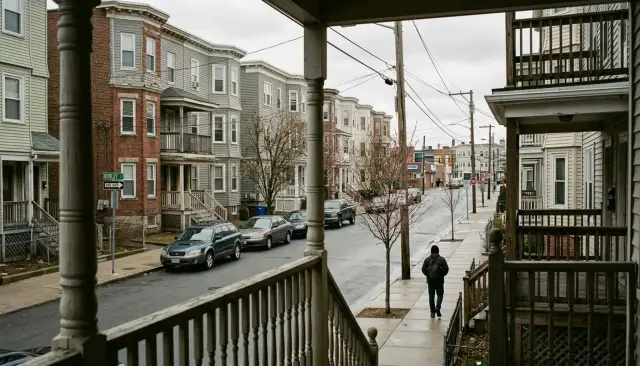
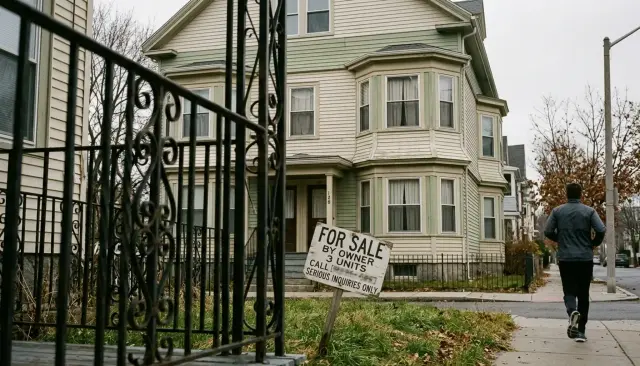
Get a personal representative appointed, confirm the authority to sell, and manage the building and its tenants until the sale closes. If you've just inherited a triple decker in Dorchester, Roxbury, or Jamaica Plain, you're dealing with two things at once: a Massachusetts probate process that moves on its own legal timeline, and a rental property that keeps generating rent, expenses, and tenant obligations while the court works through it. For the broader process, see selling an inherited home in Massachusetts. For multi-family selling mechanics, see selling a two-family or three-family home in Boston. Juan Murray's estate and probate sales page explains how he works with personal representatives.
Key Takeaways
- When the deed was in the decedent's name alone, a personal representative usually must be appointed by the Probate and Family Court before the triple decker can be sold.
- A sale needs either a power of sale in the will or a court license to sell under chapter 202.
- Massachusetts estate tax applies only when the taxable estate exceeds $2 million, and Dorchester's median multi-family sale price was $1,200,000 from September 2025 through August 2026.
- Tenants keep their rights during probate, and possession can be recovered only through a court action.
- Heirs generally take a stepped-up basis equal to the property's fair market value on the date of death.
How does probate work for a Boston triple decker?
An heir or other interested person asks the court to appoint a personal representative, who then gets the authority to deal with the property. When the deed was in the decedent's name alone, the Massachusetts Uniform Probate Code (M.G.L. c.190B) governs who can deal with the property. For a Boston property, an heir or other interested person petitions the Suffolk Probate and Family Court to have a personal representative appointed, either informally (an administrative process for uncontested estates) or formally (decided by a judge after notice).
Once appointed, the personal representative receives Letters of Authority. Under M.G.L. c.190B §3-715, a personal representative may sell estate real estate to an arm's-length buyer, and the sale is conclusive for title purposes when the will gives a power of sale or the court has issued a license to sell under chapter 202. For a triple decker, appointment matters more than for a single-family home: the personal representative also takes on the landlord's role for every occupied unit.
How much does probate cost and how long does it take?
Costs and timing depend on the estate, the will, and whether anyone objects. Expect court filing fees, attorney fees, an appraisal, insurance and carrying costs, and possibly estate tax. For deaths on or after January 1, 2023, Massachusetts estate tax applies only when the taxable estate exceeds $2 million, and a $99,600 credit means larger estates are, in effect, taxed only on the value above $2 million (M.G.L. c.65C §2A). That threshold matters for multi-family owners: the median sale price of multi-family homes from September 2025 through August 2026 was $1,200,000 in Dorchester (02121, 02122, 02124, 02125), $1,430,000 in Jamaica Plain (02130), and $1,030,000 in Roxbury (02119) (MLS PIN), before counting any other assets in the estate.
Timing depends on whether probate is informal or formal, whether there is a will, and whether anyone objects. Contested wills, disputes among heirs, or a partition case add time. Creditors generally have one year from the date of death to bring claims (M.G.L. c.190B §3-803), which is why personal representatives often hold back funds before distributing proceeds.
Who manages rental income during probate?
The personal representative is responsible for collecting rent, paying the building's expenses, and keeping records for the estate's accounting. Rent is generally deposited into an estate account rather than paid directly to heirs. Rental income received by the estate can create income tax filing obligations for the estate, so bring the estate's tax advisor in early.
What rights do tenants have during probate?
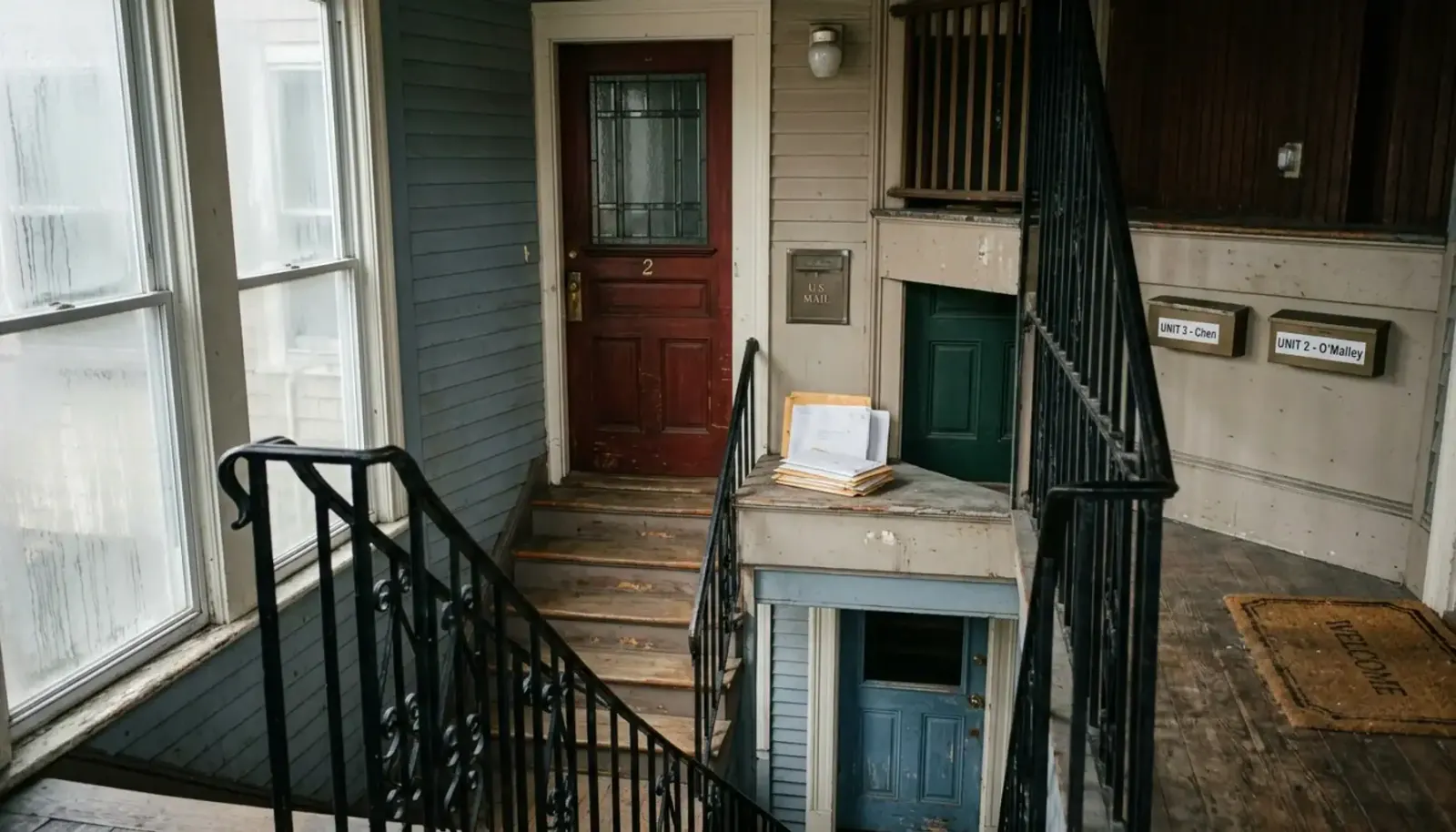
The same rights they had before. Tenants' rights under Massachusetts law don't pause for probate. Security deposit, habitability, and notice rules still apply, and the personal representative steps into the landlord's role. No one may recover possession of a unit except through a court action (M.G.L. c.184 §18), so ending a tenancy to deliver a vacant building takes notice and, if a tenant does not leave, the court eviction process. Many estates sell triple deckers with tenants in place.
How do multiple heirs affect a probate triple decker sale?
They can slow it down or, in a dispute, push it into a partition case. A personal representative with sale authority does not need every heir's signature on the deed, but heirs receive notice and can object in court, so a sale goes far more smoothly when they agree. If the estate has already been distributed and the heirs hold title together, every co-owner must sign. If three siblings co-own a triple decker and one wants to sell while another wants to keep the rental income, any of them can petition for partition, which the Probate and Family Court and the Land Court both hear (M.G.L. c.241 §2). The court can order a sale and divide the proceeds, at significant legal cost.
How does the stepped-up basis affect taxes on an inherited triple decker?
It usually cuts the taxable gain. Heirs generally take a basis equal to the property's fair market value on the date of death (IRS Publication 551), which usually cuts the taxable gain compared with the decedent's purchase price decades earlier. Massachusetts taxes long-term capital gains at the same rate as ordinary income, currently 5%, with an additional 4% surtax on taxable income above an inflation-adjusted threshold that started at $1 million (M.G.L. c.62 §4). For a triple decker that has appreciated substantially, the step-up can mean the difference between owing tax on decades of appreciation and owing tax only on gains since the date of death.
What are the steps to sell a probate triple decker?
Work through these seven steps in order.
- Confirm how title was held. A deed in the decedent's sole name usually means probate; a trust or surviving joint tenant may not.
- Get the personal representative appointed. Wait for Letters of Authority before signing a listing agreement or accepting offers; no one has authority to sign for the estate before then.
- Confirm sale authority. Ask your probate attorney whether the will grants a power of sale or whether a license to sell under chapter 202 is needed.
- Order an MLS-based valuation early. Get a comparative market analysis built on actual three-family sales, not a generic online estimate.
- Get heirs aligned before listing. Resolve disagreements with real numbers before they escalate toward a partition case.
- Confirm tenant lease status. Know which units are occupied, on what terms, and what notice rules apply before deciding to sell occupied or vacant.
- List and sell using the standard Massachusetts process. The Offer to Purchase, Purchase and Sale Agreement, and closing follow the same path as any Boston triple-decker sale.
FAQ
Does a triple decker have to go through probate if only one owner is listed on the deed?
Generally, yes. If the deceased owner held the triple decker solely in their own name, a personal representative usually must be appointed before it can be sold, regardless of how many heirs are named in the will.
Can heirs sell a triple decker if one sibling refuses to agree?
A personal representative with sale authority can sign without every heir's signature, though an objecting heir can raise concerns with the court. If the heirs already co-own the property, all must sign, and any co-owner can petition for partition, which can lead to a court-ordered sale.
Do tenants have to move out before a triple decker can be sold through probate?
No. Tenants keep their legal protections, possession can be recovered only through a court action, and many probate triple deckers sell to buyers who take over the tenancies.
What is the stepped-up basis and how does it affect taxes on an inherited triple decker?
The stepped-up basis resets the heirs' basis to the property's fair market value on the date of death. The taxable gain is then measured from that value, not from the decedent's original purchase price.
Is a Zillow estimate accurate for pricing a probate triple decker?
Automated estimates often struggle with three separate leases, mixed unit conditions, and rent levels. A comparative market analysis built on actual MLS sales of comparable three-family properties gives a more defensible number for the estate.
What happens to rental income collected during the probate process?
The personal representative collects rent into an estate account and pays the building's expenses from it. How that income is taxed depends on the estate's filings and distributions, so ask the estate's tax advisor.
Do I need both a real estate attorney and a broker for a probate triple decker sale?
Usually, yes. A probate attorney handles the court filings, any license to sell, and title questions, while a broker experienced with multi-family property prices and markets the building once authority is confirmed.
The bottom line: selling a probate triple decker in Boston starts with the personal representative's appointment and sale authority, and the tenants' rights carry through to the sale.
Sources
- M.G.L. c.190B §3-715: https://malegislature.gov/Laws/GeneralLaws/PartII/TitleII/Chapter190B/Section3-715
- M.G.L. c.190B §3-803: https://malegislature.gov/Laws/GeneralLaws/PartII/TitleII/Chapter190B/Section3-803
- M.G.L. c.241 §2 (partition): https://malegislature.gov/Laws/GeneralLaws/PartIII/TitleIII/Chapter241/Section2
- M.G.L. c.184 §18: https://malegislature.gov/Laws/GeneralLaws/PartII/TitleI/Chapter184/Section18
- M.G.L. c.65C §2A (estate tax): https://malegislature.gov/Laws/GeneralLaws/PartI/TitleIX/Chapter65C/Section2A
- Boston Bar Association, "What to Know About the Recent Change to the Massachusetts Estate Tax": https://bostonbar.org/journal/what-to-know-about-the-recent-change-to-the-massachusetts-estate-tax/
- M.G.L. c.62 §4 (income tax rates and surtax): https://malegislature.gov/Laws/GeneralLaws/PartI/TitleIX/Chapter62/Section4
- IRS Publication 551, Basis of Assets: https://www.irs.gov/publications/p551
- Multi-family median prices: MLS Property Information Network (MLS PIN) via Repliers, September 2025 through August 2026
Have questions? Let's connect.
About Juan Murray
Juan Murray is a Boston broker associate with more than 30 years of experience helping buyers, sellers, and investors across Greater Boston, personally leading every transaction from the first conversation through closing.
RE/MAX Real Estate Center · (978) 581-0801
Equal Housing Opportunity. Juan Murray is licensed as a Broker in Massachusetts, regulated by the Massachusetts Board of Registration of Real Estate Brokers and Salespersons. This article is general information only and does not constitute legal, tax, or financial advice. Confirm your specific costs and obligations with your closing agent, tax advisor, or lender.